When I planned my first trip to Japan in 2024, I followed the official Japan Meteorological Agency’s cherry blossom forecast religiously. Big mistake! The forecast was off by a week, and I landed in Tokyo to find bare branches instead of the pink paradise I expected.
I had fallen into the “cherry blossom disappointment trap” because I didn’t realize there are over 600 varieties of cherry blossoms in Japan, and they don’t all bloom at once. While the famous Somei Yoshino gets all the press, the total blooming season in Tokyo actually spans 8 weeks – from early March to early May.
If you want to avoid my mistake, you need to know which variety is blooming when you land. Here is exactly what I wish I knew then: the 10 most beautiful and popular Japanese cherry blossom varieties to help you plan the perfect spring trip.
What are the most popular and beautiful cherry blossom varieties in Japan?
Somei Yoshino
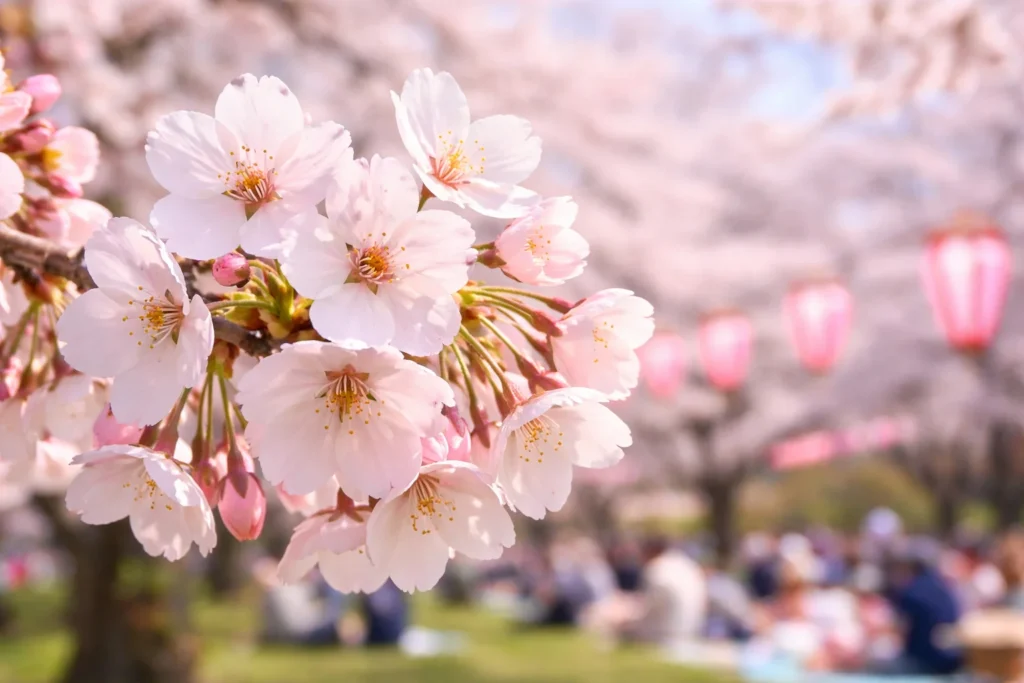
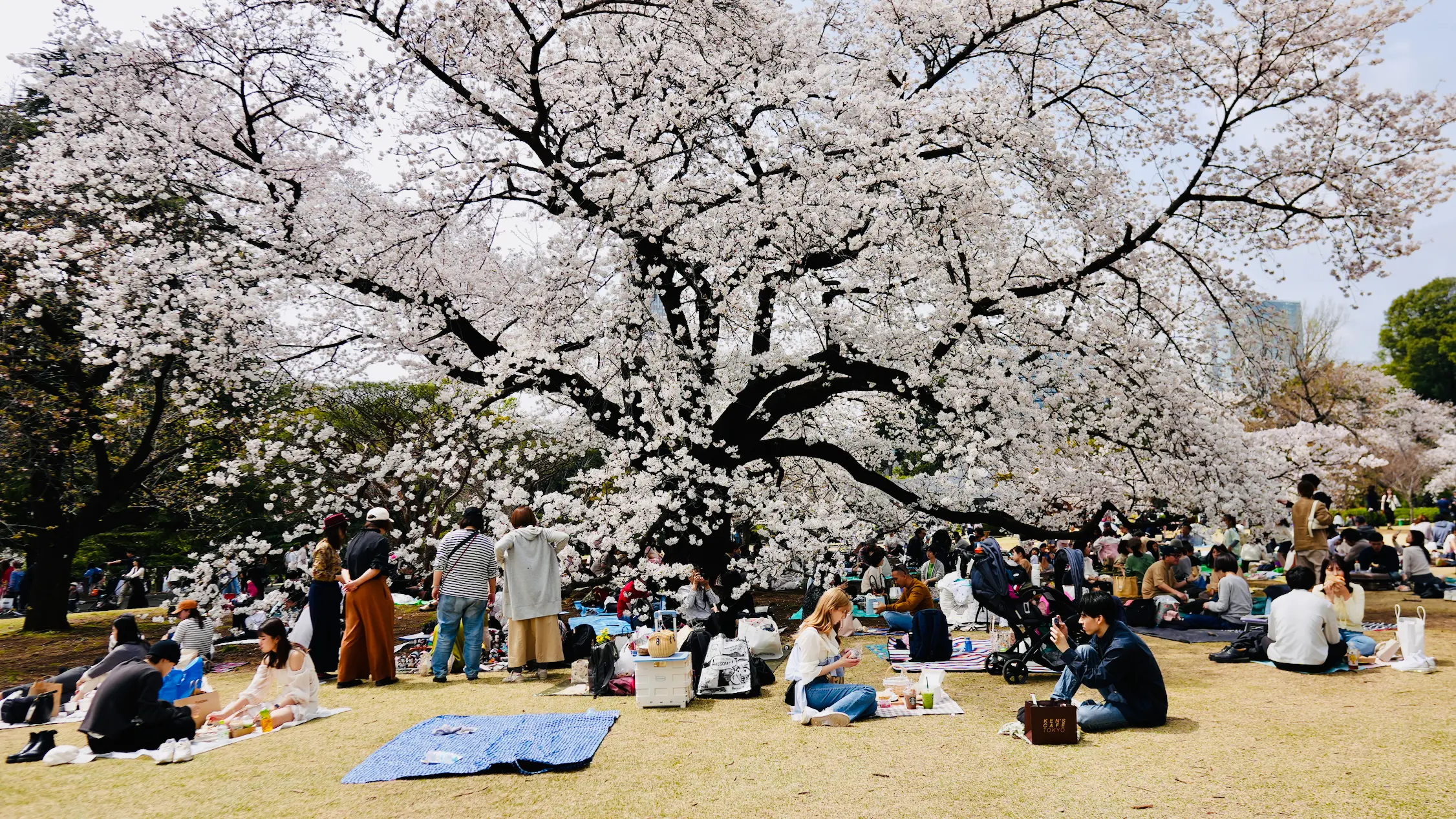
The most popular type of cherry blossom in Tokyo is Somei Yoshino. The blooms of Somei Yoshino have pale pink, almost white five petals that bloom in clusters. Flowers appear before the green leaves, creating a cloud-like effect. This cherry variety is a rather recent development, appearing only since the mid-19th as a hybrid of two cherry varieties – Oshima-zakura and Edo-higan. It was first developed in Somei village, modern-day Toshima city in Tokyo. As such, Somei Yoshino is native to Tokyo.
Because it grows much faster than other varieties and is very beautiful, Somei Yoshino accounts for approximately 70% to 80% of all cherry trees in Japan. In Tokyo, they are found in great numbers in Ueno Park, Chidorigafuchi (the moat around Imperial Palace), Shinjuku garden, and along Meguro River, among other sites.
Interesting fact: Every Somei Yoshino tree is a genetic clone of a single ancestor. This tree can’t reproduce by seed. This makes them incredibly uniform, meaning all trees in a park will bloom at the exact same time, creating the “cloud-like” effect everyone loves.
Somei Yoshino typically bloom between late March and early April, with the peak (full) bloom lasting about one week.
Shidarezakura (Weeping Cherry)
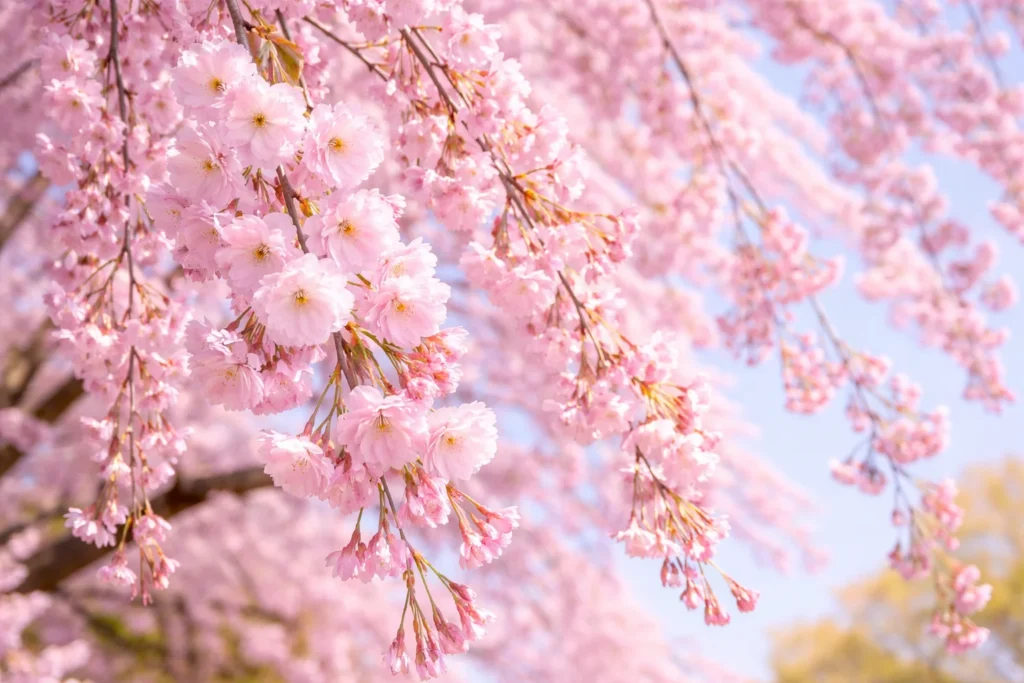
If Somei Yoshino gives viewers the impression of a cloud of flowers, then Shidarezakura impresses admirers with its waterfall-like drooping branches full of blooms. The flowers can be single (5 petals) or double (more than 5) and vary from white to deep pink.
Shidarezakura is a cultivar of the ancient Edo-higan species, with a history of appreciation dating back to the Heian period.
In Tokyo, notable specimens of Shidarezakura are at Rikugien garden, Shinjuku garden, and KOishikawa Korakuen. However, this type of cherry blossom can be found throughout the city.
The blooming period of Shidarezakura is often a few days before Somei Yoshino.
Yamazakura (Mountain Cherry)
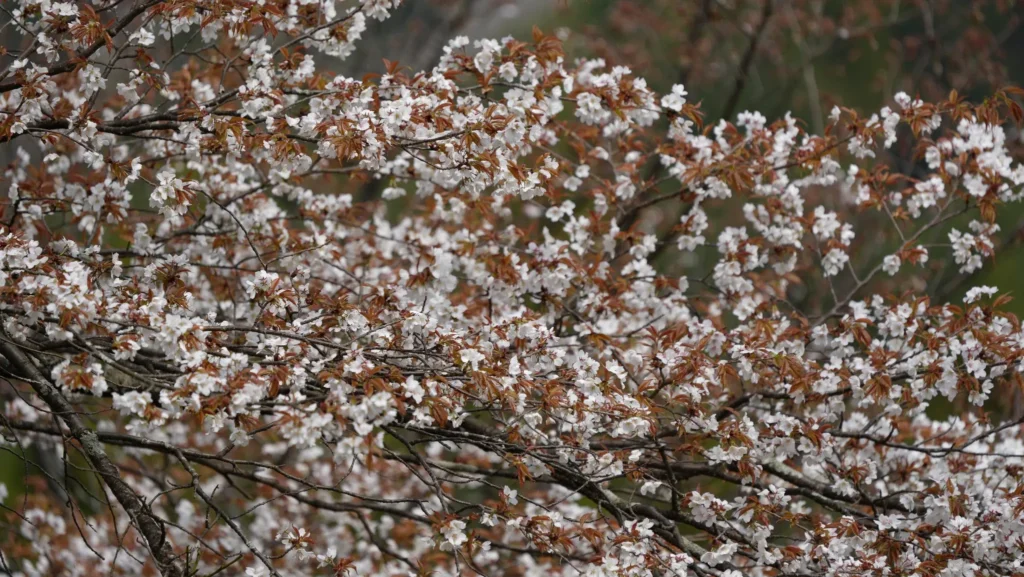
This is a wild species, with five small, light pink petals. Unlike Somei Yoshino, its blossoms and tender yound reddish-bronze leaves develop simultaneously.
As one of Japan’s most common wild cherry species, Yamazakura was celebrated in classical literature like The Tale of Genji.
These trees are often found in more natural or historic parks like Shinjuku Gyoen.
The blooming period is similar to Somei Yoshino, late March to early April.
Kanzan
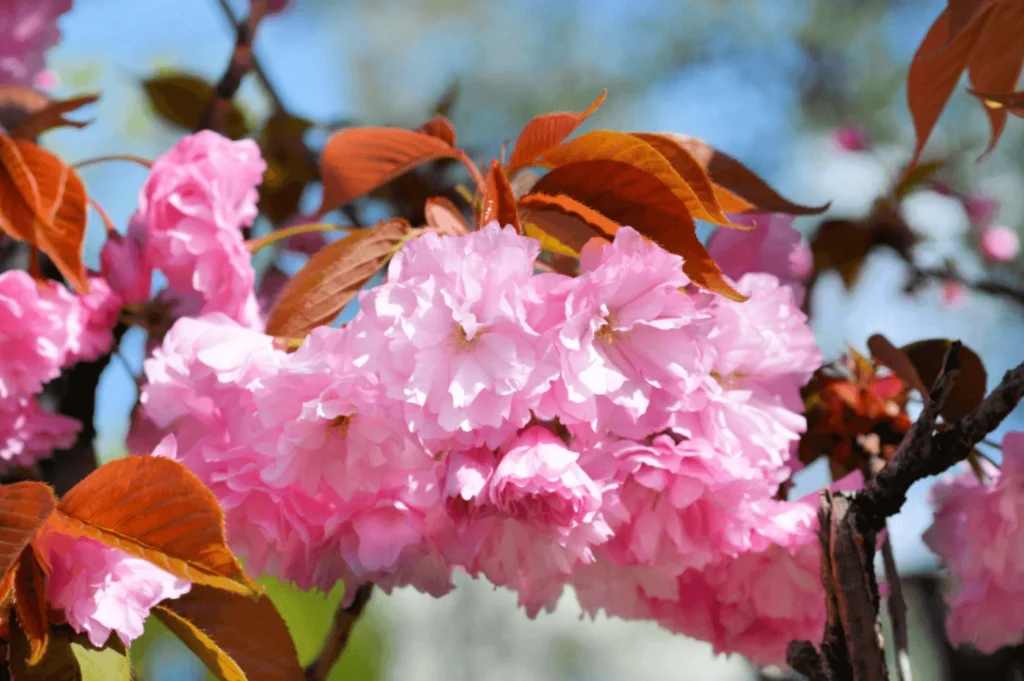
In Japanese, yaezakura means multi-petal (i.e. double) cherry blossom. The Kanzan variety is one of the most common yaezakura types. Each large, dense bloom features 30 to 50 vivid pink petals. The blooms are accompanied by coppery young leaves. Because the flowers are heavy, they hang in drooping clusters.
Kanzan cherry is abundant in large, curated gardens such as Shinjuku Gyoen National Garden and Ueno Park.
Kanzan is a late bloomer compared to Somei Yoshino. While Somei Yoshino blooms from late March to early April, the bloom period of Kanzan cherry is mid to late April.
Kikuzakura
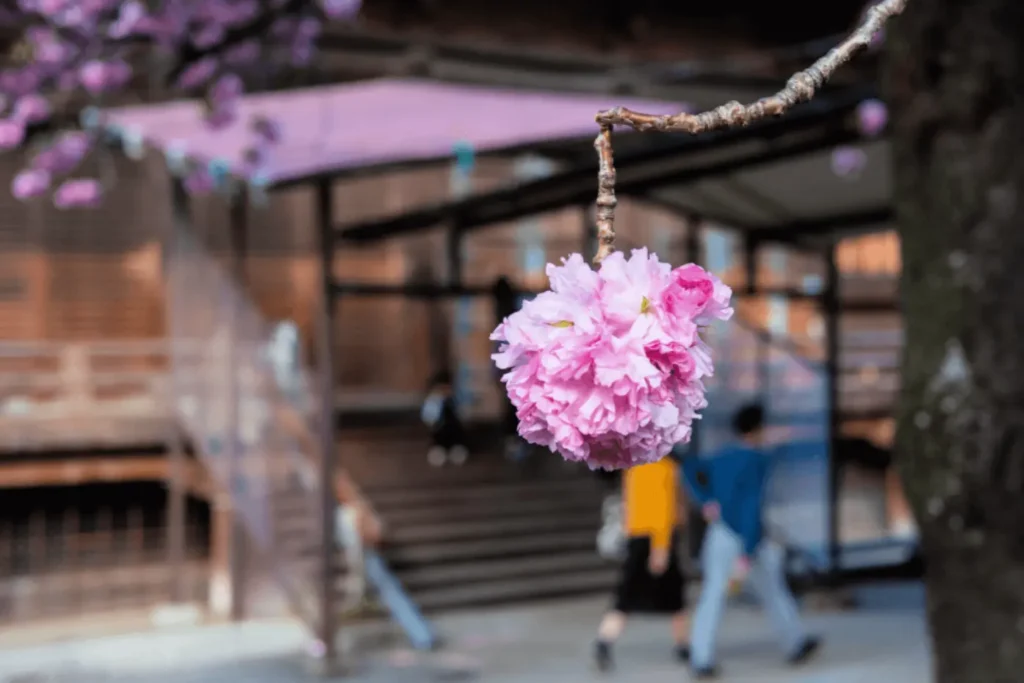
Kikuzakura, or “chrysanthemum cherry,” is a distinct, late-blooming Japanese cherry cultivar known for its exceptionally multi-petalled, pink, pom-pom-like flowers. Each blossom features 80 to over 100 petals and appear alongside green leaves.
The trees are typically small, with a narrow and upright habit, becoming more open and speading with age.
Interesting fact: the Kenroku-en Kikuzakura in Kanazawa is a specific, rare, second-generation variety with up to 300 petals. It is designated as a natural monument.
Kiuzakura blooms the latest compared to Somei Yoshino, from late April to early May.
Kawazuzakura
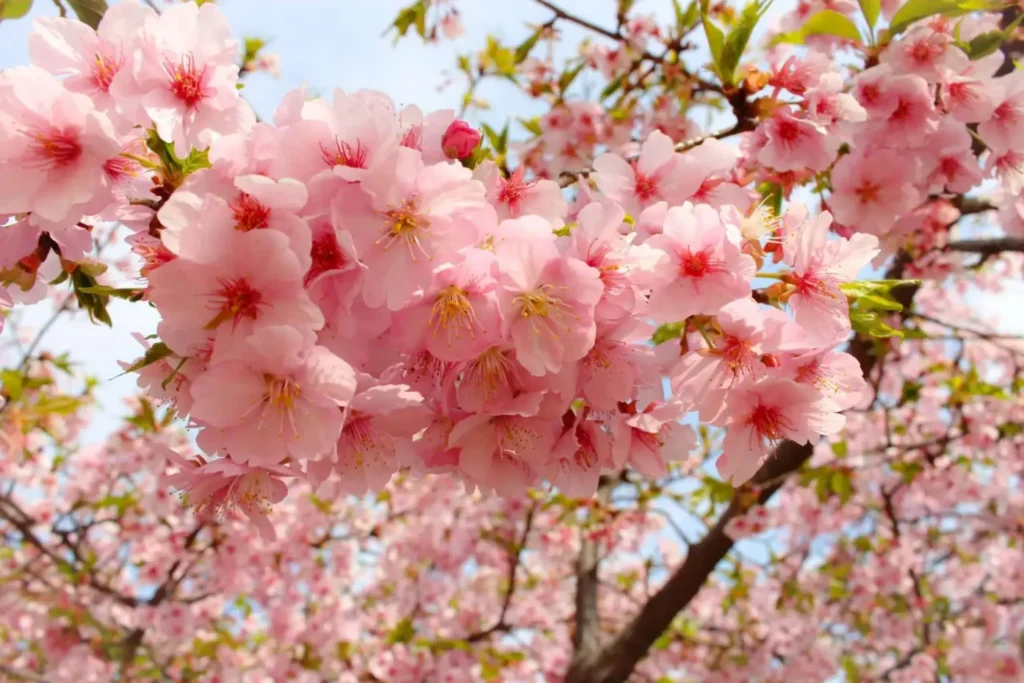
Kawazu-zakura has large, deep pink petals. So the shape of the flower somewhat resembles Somei Yoshino, but the color is much more vibrant.
This variety originated in Kazawu Town on the Izu Peninsula.
In Tokyo, it is scatter in various city parks and along residential canals, such as Yodo Canal.
This is an early bloomer compared to Somei Yoshino, with flowers appearing from late February to mid-March in Tokyo.
Ichiyo
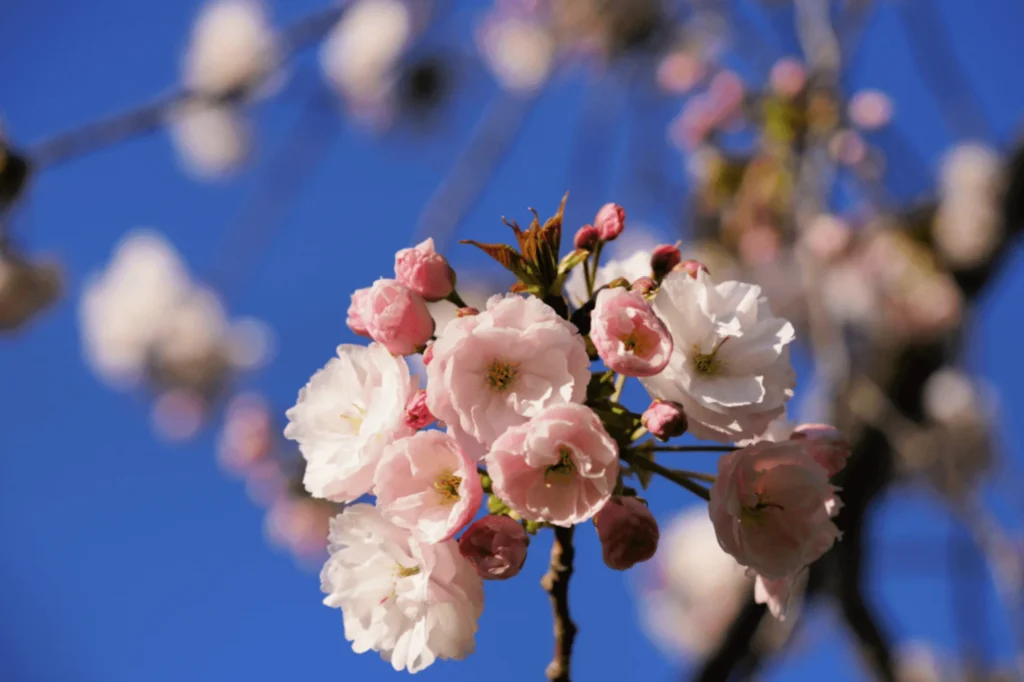
A type of yaezakura, Ichiyo blossoms have about 20 light pink petals per flower, giving the bloom a very full, fluffy appearance. The fresh leaves are green when the flowers emerge. A key characteristic is the single pistil in the center of the flower that resembles a leaf tip (“ichiyo” means “one leaf”).
Ichiyo is a popular Sato-zakura (village cherry) cultivar prized for its ample blossoms.
It is commonly planted in large parks and gardens, especially well-known in Shinjuku Gyoen.
Ichiyo is a late bloomer compared to Somei Yoshino. The blooming period of Ichiyo is mid to late April, consistent with other yaezakura varieties.
Fugenzo
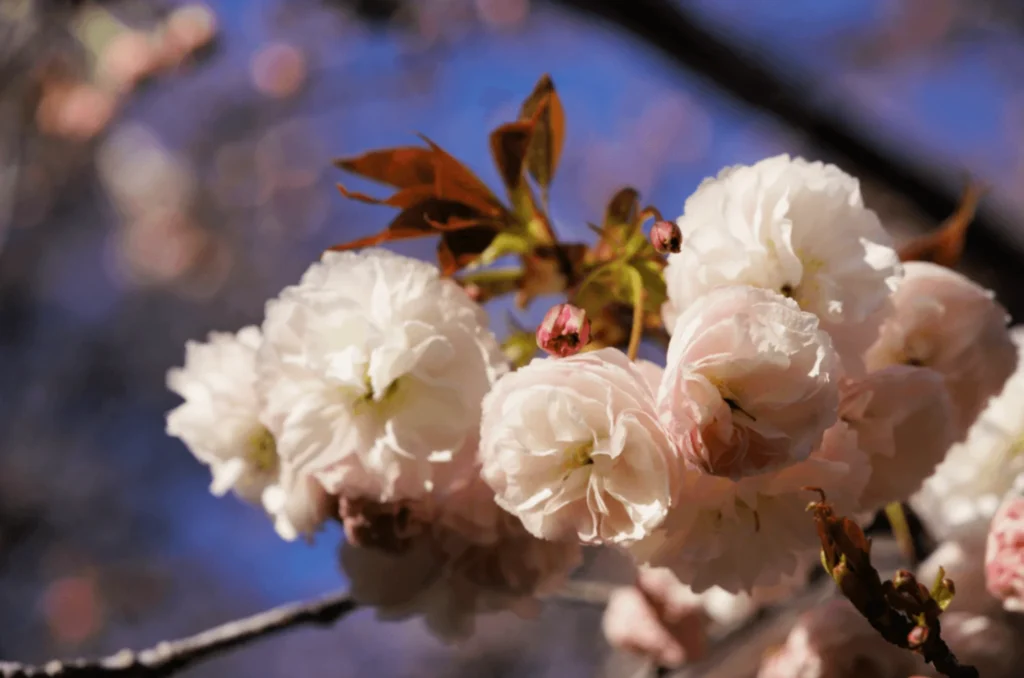
A type of yaezakura with 30 to 40 petals per blossom, the flowers of Fugenzo start white to slightly pink when they first open, and gradually deepen to a darker pink as they mature. The young leaves are copper brown.
The name is as interesting as the flower. It is named after the Fugen Bodhisattva (Samantabhadra), who is often depicted riding a white elephant. It is said to reference the shape and color of the blossom when fully open (but I struggle to see the similarity).
It is found in botanical gardens and major parks, such as Shinjuku Gyoen.
As a yaezakura, Fugenzo blooms mid to late April, after Somei Yoshino flowers have fallen.
Kanhizakura (Winter Cherry)
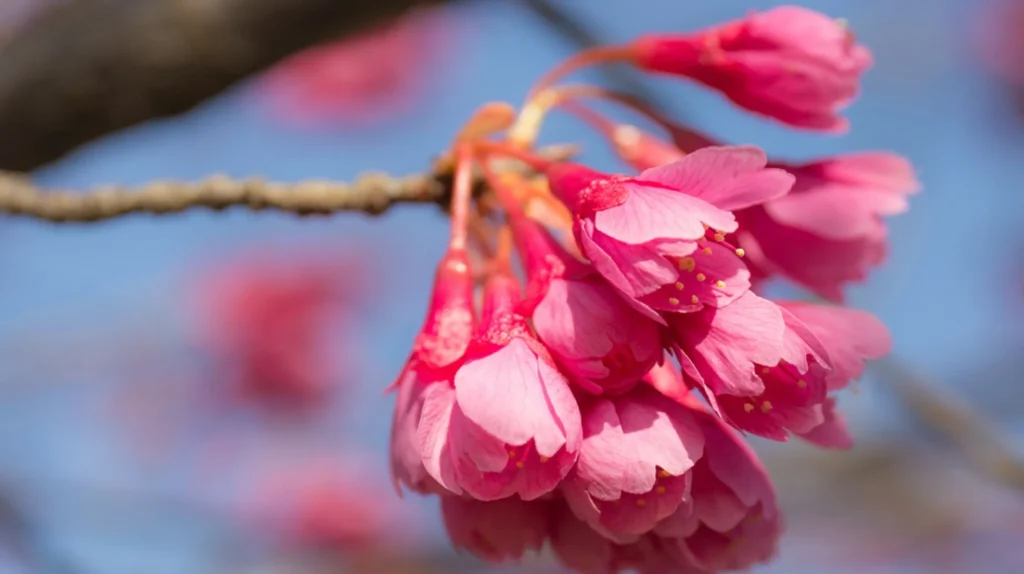
These flowers don’t look like typical cherry blossom. They have dark pink, bell-shaped flowers that hang downwards and do not open completely.
Kanhizakura is native to Taiwan and Okinawa, in much more southern latitude than Somei Yoshino’s. As a result, it is more common in southern Japan, but can still be found in Tokyo parks and botanical gardens.
Compared the blooming period of Somei Yoshino, Kanhizakura blooms very early, typically mid to late March.
Ukon
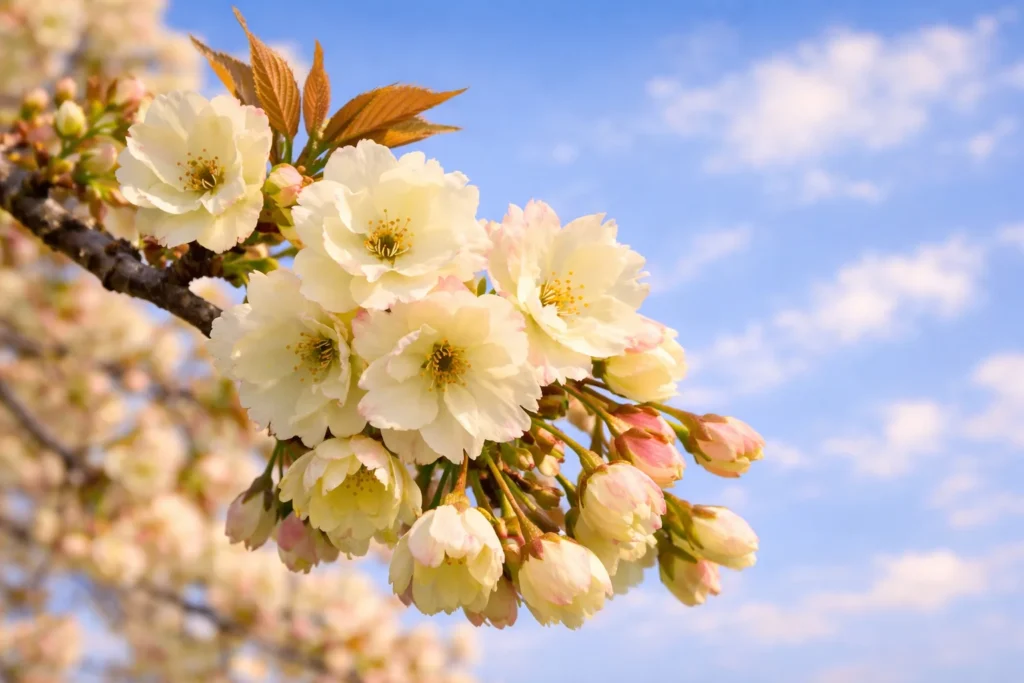
A unique variety with yellowish to pale green blooms, Ukon is a yaezakura. Each flower has 10 to 20 petals. Young leaves emerge alongside the blooms and have coppery hue.
As a yaezakura, Ukon is a late bloomer, with blooming period from mid to late April.
Planning Your Trip: Why Variety Timing is Everything
Why is it so critical to understand the blooming times of different Japanese cherry blossom varieties?
Most travelers rely solely on the Somei Yoshino forecast, unaware that it only tracks a single species. By limiting yourself to that narrow window, you risk missing out on the spectacular 8-week season that Tokyo actually offers.
When planning your spring trip to Japan, remember to balance the bloom forecast with these four factors:
- Lower Prices: Early March or late April can save you hundreds on flights.
- Accommodation Availability: Booking outside the “peak” week opens up better boutique hotels.
- Crowd Control: Popular spots like Shinjuku Gyoen are far more peaceful during the Yaezakura (double-blossom) bloom.
- Weather Stability: Late April often brings milder, more reliable spring weather than the “chilly” starts of March.
Don’t let a single forecast dictate your trip. Whether you arrive in early March for the Kawazu-zakura or late April for the lush double blossoms, Japan’s cherry blossom season is much longer and more rewarding than the travel brochures suggest.

Leave a Reply